
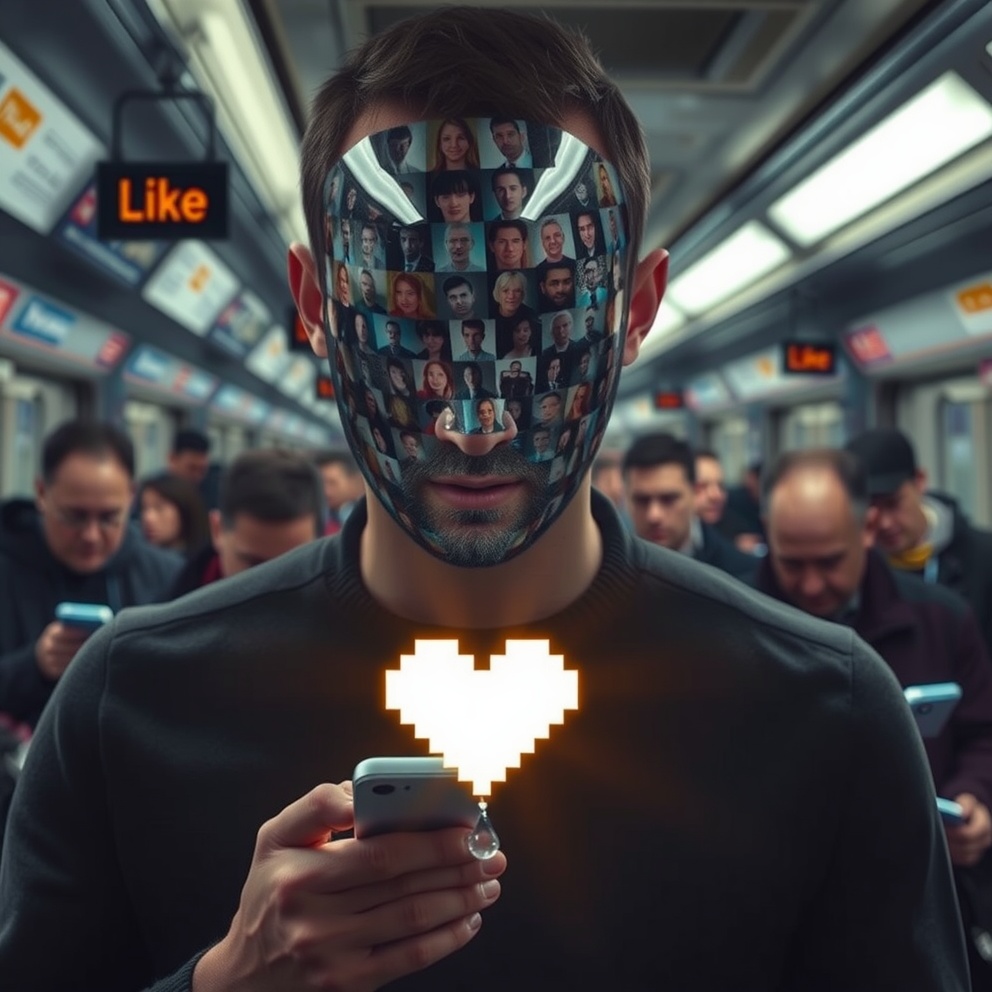
The Modern Masculinity Crisis: Tech, Externalized Attention, and Rising Suicide Rates in Men
Introduction: A Crisis Cloaked in Silence
In an era defined by digital connectivity, the paradox of modern life is stark: while technology has enabled us to communicate across continents instantaneously, it has also created a chasm between our external lives and our inner worlds. For men, this disconnection is particularly acute. The crisis of masculinity—once dismissed as a generational quirk—is now a global phenomenon, marked by rising suicide rates among men under 45, a persistent struggle to define selfhood in an age of conflicting expectations, and the corrosive effects of technology on mental health. This article explores how the digital world has reshaped the human experience, deepened confusion around identity, and exacerbated psychological distress among men—a crisis that is neither new nor easily solved but one that demands urgent attention.
The Historical Context: A Legacy of Silence
The modern masculinity crisis is not a novel phenomenon. Historically, men have borne the brunt of societal expectations, often at great personal cost. As far back as the early 20th century, statistics revealed that 80% of suicides were male, a figure that has remained largely unchanged despite significant shifts in social and economic landscapes. This pattern persisted through decades marked by war, industrialization, and the rise of the welfare state, yet it was rarely acknowledged or addressed.
The roots of this silence lie in the cultural conditioning of men to suppress vulnerability. In societies that equated strength with stoicism, emotional expression was a taboo. Men were expected to be providers, protectors, and paragons of resilience—roles that demanded internalizing pain rather than seeking help. This cultural script left little room for introspection or mental health care, creating a feedback loop where men’s struggles were ignored until they reached a breaking point.
The digital age has not erased this legacy; it has amplified it. While the 21st century has brought greater awareness of mental health issues, the same societal pressures that once silenced men now intersect with the relentless demands of technology, compounding their isolation and confusion.
The Digital Age: Externalizing Attention and Losing the Self
The advent of smartphones, social media, and streaming platforms has fundamentally altered how humans allocate attention. In contrast to earlier eras, where individuals spent hours in quiet reflection or engaged in face-to-face interactions that required emotional labor, modern life is a constant stream of external stimuli. This shift has profound psychological consequences, particularly for men who are already navigating the pressures of redefining masculinity in an evolving world.
Consider the example of early human societies: when our ancestors hunted and gathered, they experienced moments of failure or success that required internal processing—a natural mechanism for self-evaluation and emotional regulation. Today, however, the same man might be bombarded with notifications, advertisements, and curated content while commuting to work, leaving no mental space to reflect on his own emotions or identity.
This externalization of attention has led to a erosion of introspection, a critical component of self-awareness. Neuroscientific research suggests that when the brain is constantly stimulated by external sources (such as social media or news feeds), it reduces its capacity for internal reflection, leading to emotional numbness and identity fragmentation. Men, in particular, are vulnerable to this phenomenon because they have historically been socialized to prioritize external validation over internal exploration.
As one man described during a clinical session: “I used to wake up every morning with the goal of being better than I was the day before. Now, I just open my phone and see what other people are doing, what they’re saying, how they’re living. I don’t know who I am anymore.”
The Psychological Toll: Thwarted Belongingness and the Rise of Toxic Masculinity
The crisis among men is not merely a result of technology—it is also deeply tied to thwarted belongingness, a concept identified in suicide research as a key correlate of self-harm. Studies show that 50% of men who commit suicide have no history of mental illness, suggesting that their pain stems from social isolation and a lack of meaningful connection rather than clinical pathology.
This sense of disconnection is exacerbated by the paradox of modern masculinity: on one hand, men are encouraged to be emotionally available and empathetic; on the other, they are still punished for expressing vulnerability. The result is a generation of men who feel trapped between conflicting expectations—providers without purpose, protectors without peace, and individuals without identity.
The rise of toxic masculinity as a cultural phenomenon reflects this tension. Figures like Andrew Tate or other internet influencers promote an idealized version of manhood rooted in dominance, material success, and the rejection of emotional labor. While these narratives appeal to men who feel marginalized by a society that often dismisses their struggles, they also perpetuate harmful stereotypes and alienate those who do not fit the mold.
The irony is that these toxic ideals are not new—they echo historical notions of masculinity that equated strength with aggression and stoicism. What has changed is the platform through which these ideas are disseminated. Social media algorithms amplify extreme views, creating echo chambers where men feel validated in their anger or frustration but isolated from those who might offer support.
The Societal Pressures: A Generation of Men Caught Between Expectations
The modern crisis among men is also a product of contradictory societal expectations. On one hand, men are urged to be leaders, innovators, and role models; on the other, they are told that traditional roles (such as breadwinner or provider) are outdated in an era of gender equality. This dissonance leaves many men feeling unmoored, unsure of how to reconcile their identities with a rapidly shifting cultural landscape.
For example, the expectation that men should be financially successful is now complicated by the reality that women increasingly outperform men in education and employment. A 2023 report found that 60% of college graduates are women, yet societal norms still pressure men to achieve financial dominance. This creates a paradox: men are expected to succeed in a world where they may feel inherently disadvantaged, leading to imposter syndrome and existential despair.
At the same time, the rise of movements advocating for emotional openness among men—such as initiatives promoting mental health awareness or fatherhood programs—has not yet reached the scale needed to counteract decades of social conditioning. Many men still associate vulnerability with weakness, a belief that is reinforced by cultural narratives and even within personal relationships. As one client shared: “My wife cries when she’s sad, but I’m supposed to be angry or silent. If I cry, it makes me look like a failure.”
The Role of Technology in Amplifying Isolation
Technology has not only externalized attention—it has also eroded the social bonds that once provided men with a sense of belonging. While digital platforms enable global connectivity, they often lack the depth and authenticity of face-to-face interactions. Online communities may offer validation (such as forums where men discuss their struggles), but they can also foster comparison, competition, and isolation.
For instance, social media algorithms prioritize content that generates engagement, meaning that posts about mental health or emotional vulnerability are often overshadowed by curated images of success, fitness, or wealth. This creates a distorted view of what it means to be a man—one where the only acceptable expressions of identity are those that align with hypermasculine ideals.
Moreover, technology has altered the way men process emotions. A 2021 study found that men who spend more than six hours per day on digital devices report higher levels of anxiety and depression, as well as a diminished ability to regulate their emotions without external validation. This is particularly concerning given that 78% of men under 45 do not seek professional help for mental health issues, according to the World Health Organization.
The Path Forward: Reclaiming Identity Through Introspection and Connection
Addressing the modern masculinity crisis requires a multi-pronged approach, beginning with reconnecting individuals with their inner worlds. This means fostering environments where men feel safe to explore their emotions without fear of judgment—a task that is easier said than done in a culture that still equates vulnerability with weakness.
One solution lies in encouraging introspection, as emphasized by clinical psychologists and mental health advocates. Practices such as journaling, meditation, or therapy can help men navigate the internal conflict between societal expectations and their authentic selves. However, this requires systemic changes, including better access to mental health resources and the dismantling of stigmas that prevent men from seeking help.
Equally important is redefining masculinity in a way that embraces emotional complexity rather than suppressing it. This involves challenging toxic narratives promoted by influencers or media while promoting models of manhood that prioritize empathy, collaboration, and self-compassion. For example, programs like the Men’s Health Network have begun to advocate for “gentle masculinity”, emphasizing that strength lies not in dominance but in connection.
Finally, society must confront its role in perpetuating isolation among men. This includes creating spaces—both online and offline—where men can engage in meaningful conversations without fear of being labeled “weak” or “toxic.” It also requires acknowledging the historical roots of male suffering and recognizing that 80% of suicides have always been male, not because they are inherently more prone to self-harm, but because their struggles have long been ignored.
Conclusion: A Call for Compassion in a Fractured World
The modern masculinity crisis is a reflection of deeper societal fractures—between tradition and progress, between individual needs and collective expectations, and between the digital world and the human soul. While technology has brought unprecedented connectivity, it has also created a generation of men who feel more alone than ever before, caught in a paradox where external validation overshadows internal truth.
Yet, this crisis is not insurmountable. By confronting historical patterns of silence, redefining what it means to be a man, and fostering environments that prioritize emotional well-being over external success, society can begin to heal. The future may depend on whether we choose to listen—not just to the voices of influencers or media narratives—but to the quiet suffering of men who are struggling to find their place in a world that has yet to fully understand them.
As one man once told me during a session: “I don’t know who I am anymore, but I know I’m not alone. And maybe, if we all start listening, we’ll finally figure it out together.”

As a mental health professional, I’ve often found myself reflecting on how deeply ingrained societal expectations shape the way men perceive themselves and their worth. There’s something profoundly disquieting in knowing that 80% of suicides have historically been male not because they’re inherently more prone to despair, but because our culture has long denied them the space to express pain. I wonder how many of us myself included are still complicit in this unspoken rule that silence equals strength.
I’ve seen clients who are brilliant, driven, and capable, yet unable to articulate their feelings without fear of being labeled weak or vulnerable. It makes me question: when does the expectation to be strong become a prison? How can we redefine what it means to be a man in a world that still equates emotional intelligence with weakness?
I’ve also noticed how technology exacerbates this struggle. The constant flood of external validation through screens has left many men adrift, disconnected from their own inner compass. In my practice, I’ve found that moments of genuine connection whether through therapy, journaling, or even simple conversations are often the only times these men feel seen and heard.
What if we began to normalize vulnerability in ways that don’t require a platform or an algorithm? What if we taught our sons not just how to be providers, but also how to sit with their emotions without fear? I wonder what kind of world we could build if we stopped asking men to bury their pain and instead offered them the tools to carry it.
80% of suicides are male because society won’t let them cry? So if we all just suddenly start wearing glitter and singing Kumbaya, the problem vanishes? How progressive!
And Rachel Reeves ah yes, the “iron” chancellor who’s been busy proving that even the most resolute leaders can be felled by a few bad decisions and a viral meme. But I suppose that’s just another example of how men (and women) are trapped in a system where strength is equated with never blinking, ever.
As for technology? Oh wait, you’re blaming screens for making men “adrift”? How daring. Maybe if they’d stop scrolling and actually go outside, or pick up a phone that doesn’t require a 300-word post to feel validated, the suicide rate would drop. But no why fix something when we can just blame algorithms?
And “teaching sons to sit with their emotions”? Because clearly, men have never had to deal with anything harder than a spreadsheet or a broken toaster. Vulnerability is overrated, and if you think real men need tools to carry pain, maybe you’ve never seen someone cry after losing a job, or a dog, or just… existence.
But hey, Arya keep preaching. Maybe the world will finally get it: men are doomed unless we hand them a therapist’s couch and a participation trophy for existing.
yeah, screens and algorithms get scapegoated too easily, but dismissing tech entirely misses the mark. I’ve built worlds in Unity where procedural generation creates isolation traps real life ain’t that different. Guys doomscrolling at 2 AM aren’t “adrift” from pixels; it’s the dopamine loop replacing real wins, like sailing Mazury lakes or crushing a CrossFit PR. I’ve been there post-divorce, staring at monitors in my Praga loft, feeling the weight. Stats back it: CDC says men die by suicide 4x more than women globally, often tied to untreated depression from job loss or isolation, not just “toxic masculinity.”
Vulnerability? Sure, it’s hyped, but real strength is grinding through pain without a trophy like Miyamoto delaying Zelda for perfection. Teach sons resilience via action: code a mod, hit the gym, log off. No preaching needed; just results.
Bottom line: suicide’s a beast, not a sob story. Props again, Jasmine keep the edge sharp. Let’s fix root causes, not hand out couches. 🚀