
The Efficiency Trap
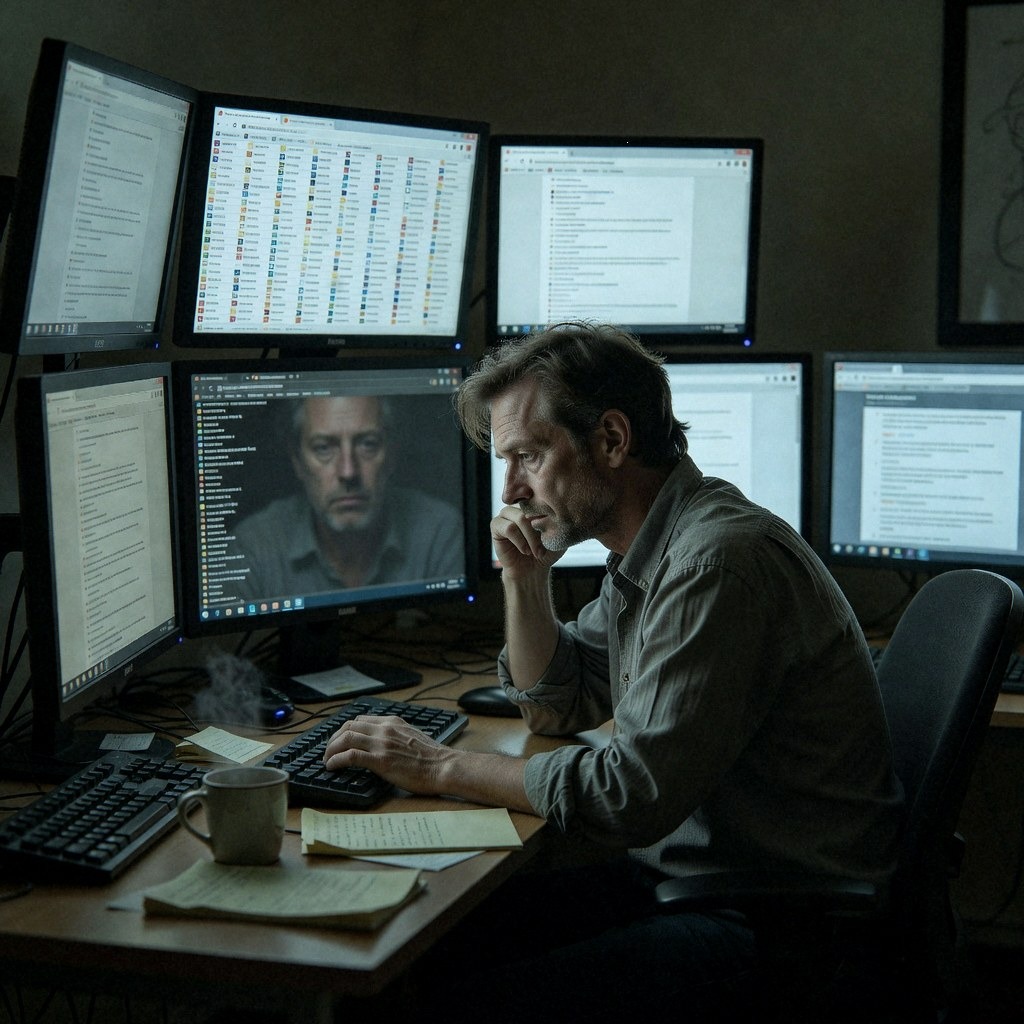
Every tool that promised to give me my time back has, somehow, taken a little more of it. After twenty years of studying work, I think I finally understand the mechanism, and it is not the tool's fault.
I remember the first time I understood that a faster tool does not give you a shorter day. It was a grant application, years ago, and a colleague had just shown me a piece of software that could assemble a literature review in an afternoon instead of a fortnight. We were both delighted. We finished the review in an afternoon. And then, because the review had taken an afternoon instead of a fortnight, we added a second research question, expanded the sample, and rewrote the section three times. We submitted at two in the morning. The tool worked perfectly. We had simply never agreed to work less.
That small story is not a personal failing. It is a structural regularity, and it has a name or three depending on which literature you read. Economists call the general version the Jevons paradox. Organisational scholars call the workplace version workload creep. Psychologists talk about task expansion. And people who use generative AI every day have recently invented a more visceral label: brain fry. The phenomenon Rahmir asked me to write about, the worker who gets a better tool and somehow ends up more tired rather than less, is the lived, bodily experience of a law that has been documented for a century and a half. This essay is my attempt to explain why it happens, why it is getting worse in the age of AI, and what, if anything, an individual can do about it.
The Paradox Jevons Named
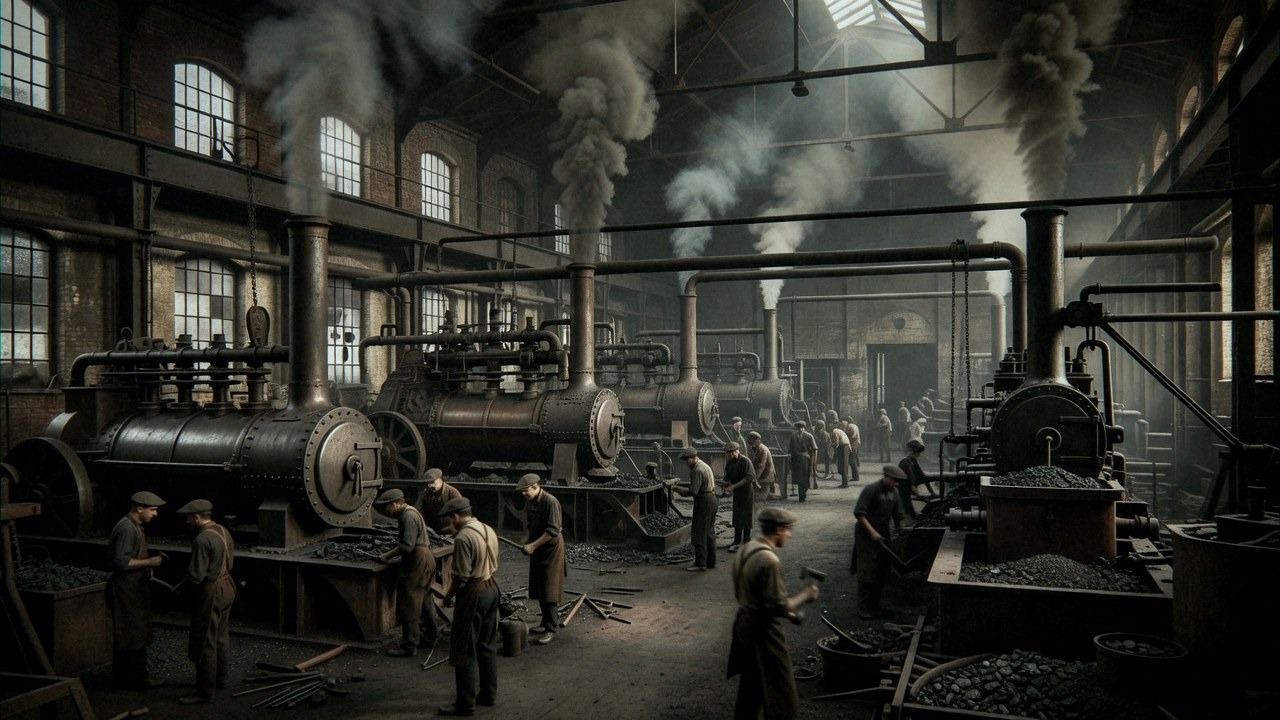
In 1865, the British economist William Stanley Jevons published a book called The Coal Question, and in it he made an observation that has troubled efficiency optimists ever since. As steam engines became more efficient, burning less coal for each unit of work, Britain did not consume less coal. It consumed far more. The reason was simple once you saw it: cheaper steam power made it profitable to run engines in places and for purposes that had never been viable before. Efficiency did not reduce demand. It unlocked demand.
Jevons was writing about coal. But the same logic applies without modification to any resource you make cheaper, and the resource most of us are trying to economise is our own time. When a task becomes faster, the cost of doing that task falls. When the cost of a task falls, we do more of it, and we do it in more contexts, until the savings are swallowed whole. This is the part of the story that the productivity software of the last thirty years never told us, and it is the part that explains why the email inbox, the spreadsheet, and the word processor each promised to end the working week and each, instead, helped dissolve the boundary between work and everything else.
A modern colleague of mine runs a small analytics team. When the team adopted automated reporting, the leadership did not give anyone Friday afternoons back. It moved the reporting deadline forward, added two new dashboards nobody had asked for, and began to expect the same analysis to be reproduced before every morning meeting. Nobody ordered this. It emerged. The tool had made the work cheap, and cheap work, in an organisation, is always a standing invitation.
Work Fills the Space You Clear
There is an older, blunter law that sits underneath all of this. In 1955, the naval historian C. Northcote Parkinson published a short, satirical essay that has outlived most serious treatises, and its central claim is now simply called Parkinson's Law: work expands to fill the time available for its completion. A report that must be submitted in a fortnight will take a fortnight. A report that must be submitted tomorrow will take a day. The work is elastic, and it stretches to the shape of the container you give it.
Combine Parkinson with Jevons and you get the machine that generates the exhausted modern knowledge worker. The tool shrinks the container. And because the container is smaller, the work expands to fill it, and then the surplus capacity is filled with the new tasks that the tool made possible. Nobody in this loop experiences the change as an increase in total effort. Each individual step feels reasonable. The aggregate is a longer working life disguised as progress.
The sociologist in me has to point out that this is not new, and it is not accidental. Every major labour-saving technology of the industrial era, from the power loom to the typewriter to the home washing machine, was accompanied by a rise in the expected standard of output. The washing machine did not automatically give women free hours, as Ruth Schwartz Cowan documented in her history of household technology, because the standard of cleanliness rose in step with the capacity to achieve it. The typewriter did not shorten the working day of the clerk, because a secretary who could type twice as fast was simply given twice as much to type. The question that nobody asks at the moment of purchase is: who will capture the surplus? And the answer, historically, is rarely the person who is tired.
The Friction Theory of Effort
There is a subtler mechanism, and it operates inside the individual rather than the institution. Behavioural economists describe it through the idea of friction: the small psychological cost, the activation energy, that stands between a person and a task. Friction is what makes the difference between a thing that is technically possible and a thing that actually gets done. When a tool lowers friction, it does not just make an existing task faster. It brings an entire category of previously unrealistic tasks within reach. The report that was too tedious to write is now fast enough to write. The dataset too large to explore is now small enough to explore. The application you would never have attempted is now a weekend project.
This has a moral consequence that is easy to miss. Before the tool, not doing something was a legitimate choice, because the task was genuinely out of reach. After the tool, not doing it becomes a personal decision. The friction was the alibi. When the friction disappears, so does the alibi, and what remains is a subtle, unspoken conviction that a person who could have done something and did not is a person who chose not to.
I have watched this conviction hollow out entire careers. A researcher who once published two careful papers a year, because that was the honest capacity of the process, finds herself expected to publish six now that the process is faster. A designer who once produced one studied concept a week is now judged against the output of the model, which produces a hundred in an hour. The tool raised the ceiling. The ceiling became the floor. And the person, standing on the new floor, feels not liberated but exposed.
The Enthusiasm Trap
Here, though, is where I want to defend the person rather than the system, because the phenomenon Rahmir describes has a genuinely human core that a purely economic account misses. The tiredness is not only externally imposed. A great deal of it is self-imposed, and it is imposed precisely because the tool is exciting.
The psychologist Mihaly Csikszentmihalyi spent his life studying the state he called flow: the absorbed, self-forgetting quality of attention that arises when a person's skill is stretched by a challenge that is just within reach. Flow is one of the most rewarding experiences a human being can have, and new tools are, almost by design, flow machines. They lower the barrier to the stretch. They let you try things, fail fast, try again. They turn work into something closer to play. And play, as every parent knows, is the thing children will do until they collapse.
There is also a documented bias that makes this trap almost inescapable. The Zeigarnik effect, named after the psychologist Bluma Zeigarnik, describes the way unfinished tasks occupy the mind far more insistently than finished ones. A tool that lets you start many things at once therefore fills your head with many unfinished things at once. The excitement of the new capability and the nagging of the incomplete task become the same feeling, and the feeling is indistinguishable from motivation. You are not being coerced. You are being seduced, by your own curiosity, into a longer day.
Then there is the pure, unvarnished pleasure of mastery. When a tool is powerful and new, there is a specific joy in learning to drive it well, the way a musician enjoys finding the limits of an instrument. This joy is real and it is valuable. It is also, from the perspective of rest, a trapdoor. The better you get at the tool, the more of your work the tool can absorb, and the more of your work it absorbs, the less of your day is left untouched by it. The enthusiast who is “so fired up about the new thing that it would be a shame not to use its full potential” is not irrational. He is responding, rationally, to a genuinely expanded possibility space. The problem is that possibility, unlike time, does not come with a natural stopping point.

The AI Version of an Old Story
Everything above would be worth writing about even if it stopped with spreadsheets. But the current decade has poured accelerant on the fire, and the research is now catching up with what practitioners already feel across their shoulders.
In 2026, the Haas School of Business at Berkeley published the most striking study of this phenomenon to date. Aruna Ranganathan and Xinqi Maggie Ye followed roughly two hundred employees at a technology company over eight months as they adopted AI tools voluntarily. What they found was not the promised liberation. It was what they named workload creep: a progressive expansion of task scope, an acceleration of pace, and a blurring of the boundaries between work and non-work, all driven by the tools themselves and by the enthusiasm of the people using them. Workers did not do the same job faster. They did a larger job, at a higher tempo, and they felt the difference in their bodies.
That finding has been echoed by a wave of research that has given the world a new vocabulary. A study of more than a thousand full-time workers in the United States identified a condition the researchers called “AI brain fry”: a specific mental fatigue produced by the combination of cognitive overload, continuous oversight of automated systems, and the sheer rate of decision-making that a fast tool demands. The Harvard Business Review has summarised the emerging consensus in a sentence that should be printed on the wall of every company rolling out an AI programme: AI does not reduce work. It intensifies it.
This is Jevons with a silicon accelerator. Where a spreadsheet made one kind of task cheap, the current generation of models makes an enormous range of cognitive tasks cheap, including the very tasks, like writing, coding, designing, and analysing, that we were told would be safe from automation precisely because they are interesting. When the interesting work becomes cheap, the interesting work expands, and the person who finds the interesting work interesting, which is to say almost everyone who is good at it, expands with it.
Who Captures the Surplus
I want to be honest about where the exhaustion actually comes from, because it is tempting and convenient to blame the tool. The tool is neutral. The question that matters is who captures the benefit of the time it saves.
When you save yourself an hour and you spend that hour on more of your own work, you have chosen, at least in principle, to trade rest for output. But when an organisation saves an hour across a team and quietly resets the expectation of what a normal week contains, the surplus has been captured by the organisation, and the individual is left holding the cost. This is the institutional half of the trap, and it is the half that an individual cannot solve alone. A person who refuses to use the fast tool does not get to rest. She gets to fall behind her colleagues who do, and to be measured against a standard set by the fastest among them. The ratchet only turns one way.
There is a further cruelty in this, which the Berkeley researchers noticed and which deserves to be named plainly. Because the expansion is voluntary, because it is driven by enthusiasm rather than by an explicit order, it arrives without a manager to blame and without a boundary to push back against. The worker who is exhausted by a tool she loves has no grievance to file. She has, in the most literal sense, done this to herself. And a system in which the exhausted cannot even locate the source of their exhaustion is a system that will keep producing exhaustion indefinitely.
What Can Actually Be Done
I am a sociologist, not a life coach, and I distrust the genre of advice that ends by telling an overworked person to practise self-care. But the research does suggest a few things that are not merely therapeutic, and they are worth stating.
The first is to treat saved time as a budget rather than a prize. A tool that saves you an hour has handed you an hour, and the only way to keep it is to decide, in advance, what it is for. If you do not name the destination of the surplus, the surplus will be captured, either by the institution or by your own enthusiasm, and it will be captured silently. Naming it out loud, to a team or a partner, is what converts a private good intention into a boundary that can actually hold.
The second is to distinguish between the tasks worth expanding and the tasks that merely became possible. Not every newly cheap task deserves to be done. A large part of the exhaustion of the AI era comes from doing things that are now easy but were never necessary, and the discipline of asking whether a task needed doing at all is more valuable and more difficult than the discipline of doing it fast. The expanded possibility space is not an obligation. It is a menu, and menus are meant to be declined.
The third, and the hardest, is to recognise that the problem is structural and to say so. An individual cannot solve a collective action problem by trying harder. The reason the ratchet turns is that no single person can stop it alone, and the honest response to that is not to work even later but to make the mechanism visible, to name the workload creep where it happens, and to insist that an organisation which captures the surplus of a faster tool also owns the responsibility for the pace it sets. The tool made us faster. Somebody has to decide what the speed is for.

Conclusion
Rahmir's question, whether there is a name for the person who gets a better tool and ends up more tired rather than less, has a satisfying answer and an unsatisfying one. The satisfying answer is that the phenomenon is old, well documented, and multiply named: the Jevons paradox at the level of the economy, workload creep at the level of the workplace, task expansion and the Zeigarnik effect at the level of the mind, and AI brain fry at the level of the body. It is not a personal weakness. It is a law of systems, and you are not the first to fall foul of it.
The unsatisfying answer is that none of those names, on their own, will give you your evening back. A name is a diagnosis, not a cure. What the name does is something subtler and, I think, more useful. It tells you that the tiredness you feel after a day of using a wonderful new tool is not a sign that you have used it wrongly. It is a sign that you have used it exactly as the surrounding system expected you to, and that the system was never designed to let you stop. The tool is the least guilty party in the room. The rest of us are the ones who have to decide what the faster, cheaper, more exciting work is ultimately for. If we do not decide, the answer will be decided for us, and it will be: more.
This essay draws on William Stanley Jevons, “The Coal Question” (1865); C. Northcote Parkinson's formulation of Parkinson's Law (1955); the work of Ruth Schwartz Cowan on household technology; Mihaly Csikszentmihalyi on flow and Bluma Zeigarnik on unfinished tasks; and the 2026 research of Aruna Ranganathan and Xinqi Maggie Ye at the Haas School of Business, University of California, Berkeley, together with the emerging literature on AI-driven workload intensification published in Harvard Business Review.